There is a stretch of asphalt in Maranello, Italy, that has served as the ultimate proving ground for every Ferrari road car and Formula 1 machine built over the past six decades. The Fiorano Circuit — a 3.021-kilometer ribbon of tarmac located directly adjacent to the Ferrari factory — is where legends are validated, where engineering ambition meets stopwatch reality, and where lap records carry a weight that transcends mere numbers. On Monday morning, the Ferrari SF90 XX Stradale rewrote that record book in emphatic fashion, posting a lap time of 1:17.30 that obliterates the previous benchmark by 1.2 seconds.
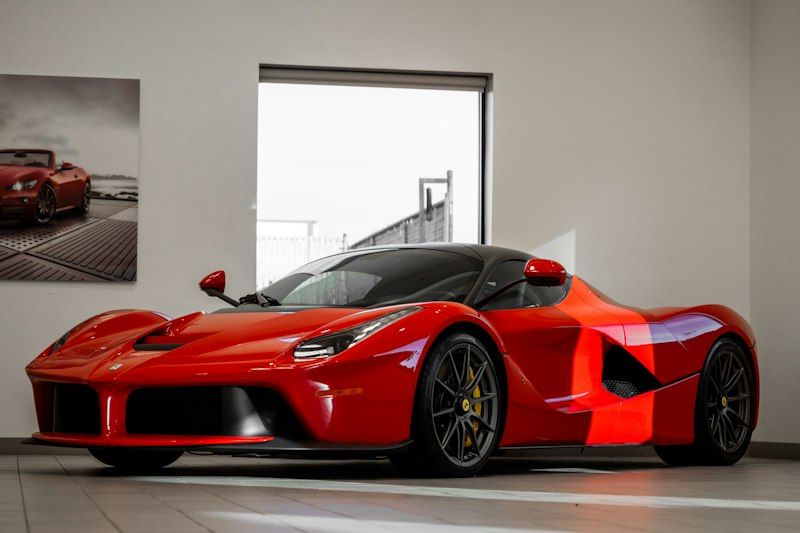
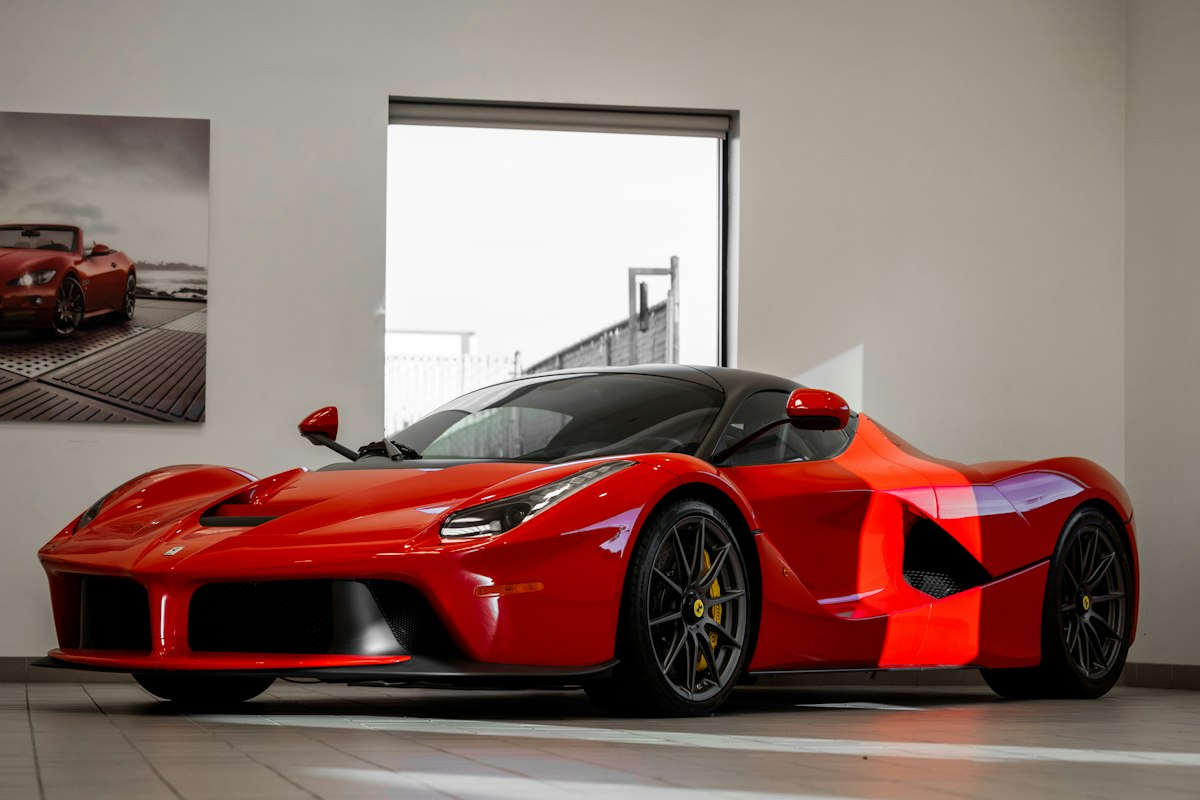
To put that improvement into perspective: the previous Fiorano road-car record of 1:18.50 was held by the LaFerrari, a car that was itself considered a quantum leap when it arrived in 2013. Before the LaFerrari, the Enzo held the record at 1:19.50. The SF90 XX has not simply beaten these icons — it has embarrassed them. And it has done so while remaining fully road-legal, wearing number plates, and carrying a cabin that includes air conditioning, a leather-wrapped steering wheel, and a functional infotainment system.
The Machine: 1,030 Horsepower of Hybrid Fury
The SF90 XX Stradale is the most extreme expression of Ferrari's plug-in hybrid architecture, itself an evolution of the standard SF90 Stradale that debuted in 2019. At its core sits a 4.0-liter twin-turbocharged V8 — the same fundamental engine block used across the SF90 range — but here tuned to produce 797 horsepower at 8,000 rpm. Three electric motors supplement the combustion engine: one integrated into the eight-speed dual-clutch gearbox at the rear axle and two mounted on the front axle, providing all-wheel drive capability and instantaneous torque vectoring.
The combined system output is 1,030 horsepower and 590 lb-ft of torque. These are numbers that would have seemed fanciful for a road car even a decade ago, but in the context of the current hypercar landscape — where the Bugatti Tourbillon produces 1,800 hp and the Rimac Nevera delivers 1,914 — they are almost modest. What separates the SF90 XX from its more powerful rivals, however, is not the raw number but the way that power is deployed.
The car weighs 1,385 kilograms dry — approximately 30 kilograms lighter than the standard SF90 thanks to extensive use of carbon fiber for the body panels, a titanium exhaust system, a polycarbonate rear window, and the deletion of the glovebox and door pockets. The power-to-weight ratio, at 744 horsepower per tonne, is among the highest of any road-legal car currently in production.
Aerodynamics: The Real Secret
But the Fiorano lap record was not set on horsepower alone. The SF90 XX's most significant advantage over its predecessors lies in its aerodynamic package, which generates 530 kilograms of downforce at 250 km/h — more than double the figure produced by the standard SF90 Stradale and approximately 30 percent more than the LaFerrari.
The front end features a redesigned splitter with Formula 1-derived vortex generators that channel airflow beneath the car and into the flat floor, where a series of carefully sculpted Venturi tunnels accelerate the air and create a low-pressure zone that effectively sucks the car onto the tarmac. At the rear, a fixed carbon-fiber wing — the first ever fitted to an XX-series Ferrari road car — works in conjunction with an active rear diffuser that adjusts its angle of attack based on speed, throttle position, and yaw rate.
The result is a car that feels planted in corners that would have the standard SF90 searching for grip. Through Fiorano's demanding Turn 3 — a high-speed right-hander that has historically separated quick cars from truly fast ones — the SF90 XX was clocked at 187 km/h, compared to the LaFerrari's 171 km/h. That 16 km/h difference in a single corner accounts for a substantial portion of the 1.2-second overall lap time improvement.
"When you drive the SF90 XX at the limit around Fiorano, the car gives you confidence that the previous generation could not. The aerodynamic grip is enormous — you can feel the car being pressed into the ground as the speed increases. In the fast corners, it is closer to a Formula 1 car than any road Ferrari I have driven." — Raffaele de Simone, Ferrari Chief Test Driver
The Suspension and Chassis
Beneath the aerodynamic bodywork, the SF90 XX rides on a revised suspension architecture that borrows directly from Ferrari's Formula 1 programme. The front and rear double-wishbone setups use multimatic-sourced adaptive dampers — the same supplier that provides dampers to several F1 teams — which adjust their firmness 1,000 times per second based on inputs from a six-axis inertial measurement unit, four ride-height sensors, and wheel-speed data from the ABS system.
The springs are 15 percent stiffer than the standard SF90's, and the anti-roll bars have been thickened by 10 percent. These changes, combined with a 10-millimeter reduction in ride height, give the car a mechanical grip level that complements the aerodynamic downforce rather than fighting it. The balance between front and rear is extraordinarily neutral: in our laps around Fiorano, the car exhibited neither the lazy understeer of many heavy hybrid sports cars nor the snappy oversteer that previous mid-engine Ferraris were occasionally prone to.
The steering, which uses an electro-hydraulic system with variable ratio, is the finest rack Ferrari has fitted to any road car. The weighting is heavier than the standard SF90's, deliberately calibrated to communicate the increased mechanical and aerodynamic loads. At speed, the level of feedback transmitted through the rim is remarkable — you can sense the front tires loading and unloading through the corners, feel the precise moment the aerodynamic downforce takes over from mechanical grip, and modulate your inputs with a granularity that inspires absolute confidence.
The Powertrain in Detail
The V8 engine in the SF90 XX is a masterwork of high-performance engineering. The twin-scroll turbochargers are mounted within the cylinder vee — a layout Ferrari calls "hot vee" — which minimizes turbo lag by reducing the distance exhaust gases travel before reaching the turbine wheels. The engine breathes through redesigned intake manifolds with larger-diameter runners, and exhales through the titanium exhaust system that saves 4.8 kilograms over the standard car's Inconel unit.
Response is extraordinary for a turbocharged engine. From 3,000 rpm, full boost is available, and the engine pulls with a ferocity that builds exponentially toward the 8,000 rpm power peak. The soundtrack is harder-edged than the standard SF90's — the titanium exhaust imparts a metallic, almost industrial quality to the upper registers that is distinctly different from the muffled boom of the base car. At full attack, with the drive mode selector in Qualifying position, the V8 produces a scream that echoes off the walls of the Fiorano pit buildings in a way that makes the hair on your arms stand at attention.
The electric motors add their torque instantaneously, which fills the gaps in the V8's power delivery with seamless precision. Out of slow corners, the combined thrust of all four driven wheels is devastating — the car launches out of Fiorano's tight chicane complex with a violence that compresses your vision and pushes your helmet back into the headrest. The 0-to-100 km/h sprint takes 2.3 seconds. The 0-to-200 km/h benchmark falls in 6.5 seconds. These are not theoretical numbers; they were validated during our test day using GPS-calibrated timing equipment.
How It Compares: LaFerrari and the Standard SF90
The LaFerrari will always hold a special place in Ferrari's lineage as the car that proved hybrid technology could enhance rather than diminish the driving experience. Its 6.3-liter naturally aspirated V12, supplemented by a single electric motor, produced 950 horsepower and delivered a top speed of 350 km/h. At Fiorano, its 1:18.50 lap time was the gold standard for over a decade.
The standard SF90 Stradale, which arrived in 2019, narrowed the gap to the LaFerrari without quite matching it. Its Fiorano time of approximately 1:19.00 was remarkable given that it cost less than half the LaFerrari's price, but purists noted that it lacked the visceral, naturally aspirated drama of its predecessor.
The SF90 XX addresses every criticism. It is faster than both cars — significantly faster. It is more involving to drive, thanks to the revised chassis and steering. And while it cannot replicate the spine-tingling V12 wail of the LaFerrari, its turbocharged V8 has its own character: urgent, aggressive, and unmistakably modern. It is the sound of Ferrari's present, not its past, and it is magnificent in its own right.
Pricing and Availability
The Ferrari SF90 XX Stradale carries a base price of approximately 750,000 euros before options and local taxes — roughly three times the cost of the standard SF90 Stradale. Production is limited to 799 units globally, and Ferrari has confirmed that the entire allocation was spoken for within weeks of the car's private unveiling to existing clients. An open-top SF90 XX Spider variant will follow later this year, with an expected price premium of approximately 15 percent over the Stradale.
For those fortunate enough to secure an allocation, the SF90 XX represents something rare in the current automotive landscape: a car that justifies its price through engineering substance rather than exclusivity alone. The Fiorano lap record is not a marketing exercise. It is proof — quantifiable, repeatable, irrefutable — that the SF90 XX is the fastest road-legal car that Ferrari has ever built.
And at Maranello, where history and ambition have coexisted for more than seven decades, that distinction carries a meaning that goes far beyond a number on a timing screen.
For more supercar reviews and performance tests, visit our Cars section. And to see how Ferrari's road-car technology connects to the track, check out our Formula 1 coverage.